
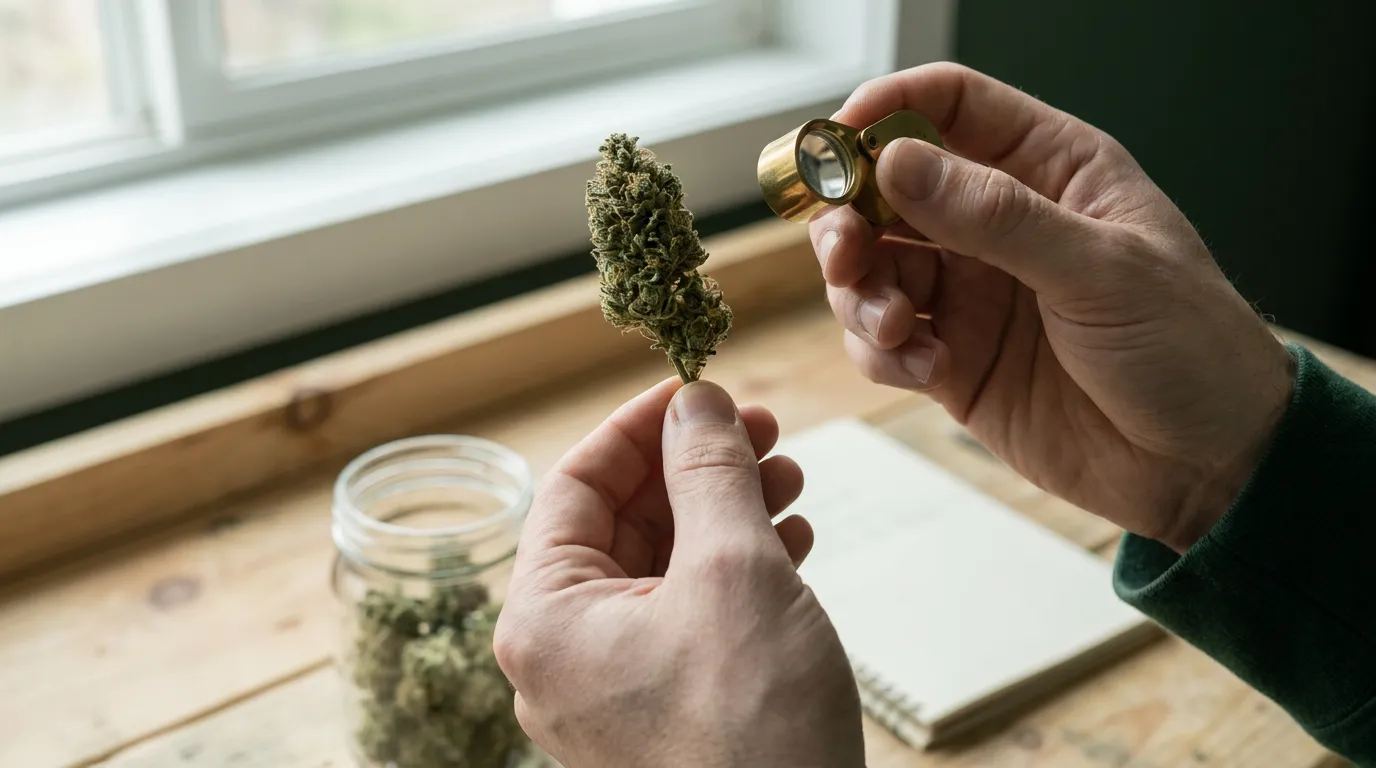
Some cannabis is irradiated before it reaches you. Here is what that actually means.
What irradiation is
The word is often misunderstood, so it is worth starting with what actually happens.
After harvest the dried flower passes through ionising radiation, usually gamma rays from a cobalt-60 source, sometimes an electron beam or X-rays. The radiation breaks up the genetic material of any microbes in there so they cannot reproduce, and it degrades some of the toxins that certain fungi leave behind.
The whole thing takes minutes, nothing gets added, and nothing radioactive stays in the flower. It is a process that has been used on food and medicine for decades, long before anybody pointed it at cannabis.
Why anybody does it
Cannabis is a crop, and like anything else that is grown, dried and kept in a jar, it picks things up along the way. Buds are sticky with resin, which makes them very good at catching whatever is floating around, and mould spores are floating around everywhere. Nothing special, ordinary farming.
Where it stops being ordinary is medicine, because if your immune system is compromised, a lower microbial load is a protection rather than just a preference. That is the reason the method exists.
What it costs
Smell, mostly. Terpenes are volatile and the lightest ones go first, which is why the loss shows up in the monoterpenes before anywhere else, while THC and CBD come through largely untouched.
What it does not remove
A study published in late 2025 in the journal Toxins, out of McGill University in Montreal, took cannabis from licensed producers and examined it after gamma irradiation. It found viable spores of mycotoxin-producing fungi still there, along with fragments of their DNA and traces of the toxins themselves.
Irradiation had done its job, in the sense that the microbial load came down a long way. It just did not come down to nothing.
The same team also found that ELISA, the test the industry leans on, is not sensitive enough on its own to catch what is left behind, and that mass spectrometry alone does not catch it either, which means some of it reaches the shelf unseen.
Their conclusion is the sentence worth keeping: once contamination has happened it is very hard to remove, so preventing it upstream will probably beat treating it at the end.
The other way
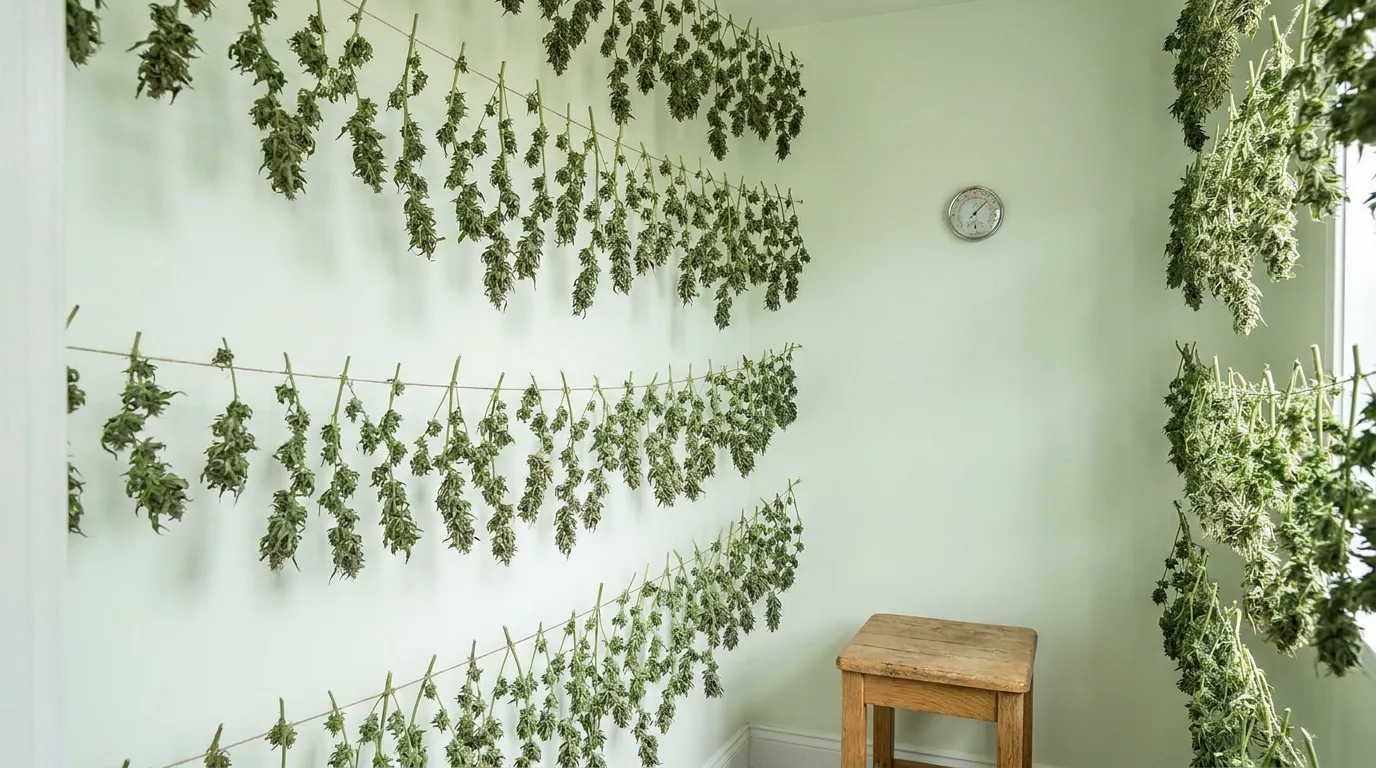
Which points straight at the alternative, where instead of fixing it at the end you stay ahead of it the whole way, with a clean room, slow careful drying, and somebody going through it by hand, plant by plant and flower by flower, looking for what should not be there.
That is not really a technique so much as an amount of attention, and it works only while somebody can still look at every single flower. Past a certain size nobody can, not because they stopped caring but because there are only so many hours in a day, and at that point the check has to move to the end, because the end is the only place left to put it.
So which is better
Neither, on its own, because it depends on what you are optimising for and who the flower is for:
- A lower microbial load, if you need one.
- An aroma that arrives intact, if you do not.
What we do
Joining a club is a choice a person makes, not a product a person buys, and that distinction is what decides where we draw the line. We take the professionalisation as far as it makes the flower better for the purpose it is intended for: clean rooms, controlled conditions, slow and careful drying, records that say what came from where, somebody looking at it by hand. All of that is worth having, and none of it costs you anything in terms of quality, aroma included.
Past a certain point, professionalising further starts to change the thing itself, and what you end up with is no longer weed that somebody grew but a product that somebody manufactured. Which route we take is not really a technical answer; it follows instead from what we are: as professional as it needs to be, and as homegrown as it should stay.
If you want more info
What is in a given flower, and what it smells of, is listed with the current strains.
Source: Rani M., Kaddoura M. J., Samsatly J., Chamberland G., Jabaji S., George S.: "Detection of Mycotoxigenic Fungi and Residual Mycotoxins in Cannabis Buds Following Gamma Irradiation", Toxins 17(11):528 (2025). Read the study
More questions? See the FAQ or get in touch. Ready to join? Membership form.